Every story has a language of its own, but within that, every genre speaks a dialect. From the moment you encounter a character's name, a location, or even the title of a work, "Genre-Specific Naming Conventions and Examples" immediately begin to prime your expectations. Think about it: a character named "Xenon-7" instantly conjures a different world than "Elara Meadowlight," and a story titled The Whispering Woods sets a vastly different stage than Cybernetic Dawn. These aren't accidental choices; they're deliberate signals, part of a subtle yet powerful conversation between creator and audience.
Effective naming isn't just about sounding cool; it's about instantly communicating genre, tone, and character. It’s an art that can immerse readers deeply or, if mishandled, leave them scratching their heads.
At a Glance: Naming with Purpose
- Names are Genre Signals: Characters, places, and titles use specific naming patterns to instantly communicate a story's genre.
- Set Expectations: Conventions help audiences anticipate themes, settings, and character types, guiding their experience.
- Beyond Tropes: While tropes are common devices (like the "final girl"), conventions are the broader rules that define a genre's landscape, including its naming styles.
- Evolution is Key: Genres and their naming conventions aren't static; they evolve, giving rise to subgenres and hybrid forms that bend or blend established rules.
- Tools for Creators: Understanding these conventions empowers you to either adhere to them for familiarity or subvert them for innovative effect.
- Consistency Matters: Whatever your approach, consistency in naming reinforces your story's internal logic and authenticity.
Beyond Random: What Are Genre Conventions Anyway?
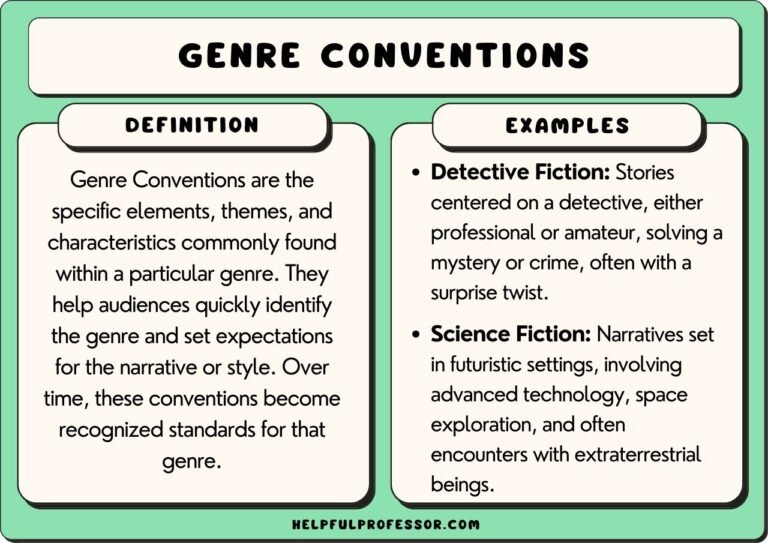
Before we dive into the nitty-gritty of naming, let's briefly unpack what genre conventions really mean. Imagine genre as a game. Genre conventions are the shared building blocks, the fundamental "rules of the game" that define its playground. They encompass recurring character types, settings, themes, narrative structures, and even visual styles. In a superhero film, for instance, you expect a protagonist with extraordinary abilities and a clear good-vs.-evil conflict, often set in a sprawling metropolis. These are the conventions.
Now, how do these differ from tropes? If conventions are the rules of the game, tropes are the common "moves" played within those rules. The "final girl" in horror is a trope, as is the wise old mentor in fantasy. These are specific, recognizable patterns that appear within the broader framework of genre conventions. A name like "Bartholomew 'Bat' Masterson" screams Western convention, while the specific trope of a gunslinger with a mysterious past might be attached to him. Tropes can be played straight, subverted, or deconstructed, offering creators a rich palette for storytelling.
Genres, much like language, are both stable and fluid. They provide a predictable framework that audiences crave, helping them anticipate the journey (think crime and family dynamics in The Godfather). Yet, they also constantly evolve. Conventions are like LEGO bricks that are assembled, disassembled, and reassembled in fresh, innovative ways. This ongoing renegotiation between creators and audiences leads to exciting subgenres and hybrid forms, like the Western/sci-fi mashup Cowboys & Aliens. Innovation, whether it's Pulp Fiction's non-linear narrative revitalizing crime dramas or Get Out blending social commentary with horror, prevents genres from becoming stagnant.
Why Naming Isn't Just an Afterthought: The Power of Convention
Naming isn't merely about slapping a label on a character or place. It's a critical act of world-building and expectation management. Names are a microcosm of genre identity. They’re often the very first clue a reader or viewer receives about the story they're about to consume. A character named "Seraphina 'Fin' Nightingale" for a gritty cyberpunk thriller would feel jarring, wouldn't it? That's because the name clashes with the established conventions of the genre.
The impact of naming on immersion and audience anticipation cannot be overstated. When a name fits, it feels natural, helping the audience suspend disbelief and settle into your story. When it doesn’t, it pulls them out, creating a disconnect. Effective naming instantly informs us about:
- The World: Is it futuristic, ancient, magical, or mundane?
- The Character: Are they heroic, villainous, common, or extraordinary?
- The Tone: Is it serious, whimsical, dark, or lighthearted?
Consider the name "Blade Runner." It's immediately evocative of a specific type of science fiction—dark, gritty, perhaps involving hunters of some kind. The name itself sets the stage, long before any visuals or plot points emerge. This is the power of understanding and applying genre-specific naming conventions.
Cracking the Code: Genre-Specific Naming Conventions in Detail
Let's explore how different genres employ distinct naming conventions, shaping our expectations and immersing us in their unique worlds.
Fantasy: Echoes of Epic and Enchantment
Fantasy names often strive for a sense of history, magic, and otherworldliness. They're designed to transport you to realms brimming with ancient prophecies, powerful sorcery, and mythical creatures.
- Character Names: Expect names that are often archaic, unique, multi-syllable, and sometimes challenging to pronounce. They can sound elven, dwarven, or carry a hint of forgotten lore.
- Examples: Elara, Kaelen, Gandalf, Daenerys, Aragorn, Lyra, Drizzt Do'Urden. Even common names can be made unique with a specific epithet, like "Geralt of Rivia."
- Place Names: These are typically descriptive, evocative, often compound words, or have a lyrical quality. They paint mental pictures of grand landscapes, hidden cities, or ominous fortresses.
- Examples: Rivendell, Dragon's Breath Mountain, Stormwind, Mordor, Winterfell, Valyria, Camelot.
- Magic/Creature Names: Can be Latinate, guttural, whimsical, or deeply symbolic. They often hint at the creature's nature or the magic's effect.
- Examples: Horcrux, Balrog, Fae, Dementors, Ents, Dragons, Gryphons, Wargs.
- Titles: Often direct, epic, hinting at grand quests, vast worlds, or significant artifacts.
- Examples: Lord of the Rings, A Song of Ice and Fire, The Name of the Wind, Mistborn, The Chronicles of Narnia.
Science Fiction: The Future, The Unknown, The Alien
Sci-fi naming conventions reflect a world of advanced technology, distant galaxies, and often, a questioning of humanity's place in the universe. Names tend to be futuristic, clinical, or subtly alien.
- Character Names: Can be clinical, alphanumeric designations, futuristic, or subtly non-human. They might reflect a post-human society or alien origins.
- Examples: K-2SO, Neo, Ripley, Zorg, Commander Shepard, Deckard, Sarah Connor, X-O Manowar. For a helpful resource when brainstorming such names, you might find a Reedsy name generator invaluable.
- Place Names: Often technical, planetary, corporate, or abstract. They might evoke sterile efficiency, vast cosmic distances, or controlled environments.
- Examples: Coruscant, Pandora, Tyrell Corporation, LV-426, Arrakis, Cybertron, The Citadel.
- Tech/Species Names: Frequently use acronyms, portmanteaus, Latin/Greek roots, or sound functional and descriptive of their purpose or nature.
- Examples: Warp Drive, Xenomorph, HAL 9000, Lightsaber, Replicants, Transporter, T-800.
- Titles: Often include numbers, technical terms, or grand, speculative concepts.
- Examples: Blade Runner 2049, Dune, Neuromancer, Star Wars: A New Hope, The Martian, Ender's Game.
Horror: Whispers of Dread and Despair
Horror names aim to elicit fear, anxiety, and suspense. They can be chillingly mundane, disturbingly evocative, or unsettlingly ambiguous, reflecting the terror that often lies beneath the surface of the familiar.
- Character Names: Often surprisingly mundane (to heighten relatability and contrast with the horror), or stark and ominous. Sometimes, the antagonist is known by a terrifying epithet rather than a given name.
- Examples: Laurie Strode, Norman Bates, Pennywise, Michael Myers, Hannibal Lecter, Carrie White.
- Place Names: Isolated, familiar yet twisted, or classic gothic. They often imply abandonment, a dark history, or simply being "off."
- Examples: Elm Street, Arkham Asylum, Overlook Hotel, Bly Manor, Crystal Lake, Amityville.
- Creature/Phenomenon Names: Descriptive, psychological, or ambiguous, often focusing on what they do or are rather than a traditional name.
- Examples: The Babadook, Cthulhu, The Thing, The Demogorgon, The Cenobites, Ghosts, Demons.
- Titles: Short, impactful, often hinting at the threat, a specific location, or a core unsettling concept.
- Examples: It, The Exorcist, A Quiet Place, Hereditary, Psycho, The Blair Witch Project.
Thriller/Mystery: Shadows, Secrets, and Suspense
Names in thrillers and mysteries typically lean towards realism, yet carry a subtle weight of secrets, danger, or intrigue. They can be deceptively ordinary, inviting the audience to look closer.
- Character Names: Often common, slightly old-fashioned, or deliberately unassuming. This allows the character's actions and the plot's twists to define them, rather than an exotic name.
- Examples: Jack Reacher, Sherlock Holmes, Lisbeth Salander, Alex Cross, James Bond, Jessica Fletcher.
- Place Names: Urban, specific, or symbolic, often tied to a crime scene, an investigation, or a place where secrets are hidden.
- Examples: Baker Street, Gotham City, a desolate cabin in the woods, the Kremlin, a nondescript office building.
- MacGuffin/Organization Names: Often clinical, ominous, code-like, or seemingly innocuous yet powerful.
- Examples: SPECTRE, ARGUS, The Organization, The Zodiac Killer, The Maltese Falcon.
- Titles: Frequently questions, action verbs, or evocative nouns that hint at the core conflict, a missing element, or the central mystery.
- Examples: Gone Girl, The Silent Patient, The Girl with the Dragon Tattoo, Knives Out, The Da Vinci Code, And Then There Were None.
Romance: Hearts, Hopes, and Happily Ever Afters
Romance naming conventions focus on warmth, appeal, and often a touch of traditional charm. Names are chosen to be likable and memorable, reflecting the emotional core of the genre.
- Character Names: Often classic, appealing, sometimes with a gentle symbolism. They should be easy to imagine falling in love with, or at least being drawn to.
- Examples: Elizabeth Bennet, Mr. Darcy, Noah Calhoun, Bridget Jones, Harry Burns, Sally Albright, Anastasia Steele.
- Place Names: Idyllic, charming, or pivotal to the development of the relationship. Think cozy towns, picturesque natural settings, or places of significant shared memory.
- Examples: Pemberley, Verona, a quaint coffee shop, a picturesque beach, a charming small town, Paris.
- Titles: Often sweet, emotional, or reflecting the central dynamic or journey of the protagonists. They frequently use familiar phrases or direct declarations of love.
- Examples: Pride and Prejudice, The Notebook, Red, White & Royal Blue, When Harry Met Sally, P.S. I Love You, To All the Boys I've Loved Before.
Western: Dust, Deserts, and Desperadoes
Western naming embodies rugged individualism, the harsh frontier, and a sense of raw justice. Names are often strong, evocative of the land, or carry a hint of a troubled past.
- Character Names: Rugged, descriptive, sometimes metaphorical, or reflecting a simpler, harder time. Nicknames are common, often tied to a character's skill or reputation.
- Examples: Wyatt Earp, The Man with No Name, "Dutch" van der Linde, Rooster Cogburn, Billy the Kid, Doc Holliday.
- Place Names: Geographic, evocative of hardship, or simple frontier towns. They paint a picture of untamed landscapes and burgeoning settlements.
- Examples: Dodge City, Monument Valley, Redemption, Tombstone, Deadwood, Oakhaven, Redemption Gulch.
- Titles: Often direct, featuring settings, characters, or conflicts central to the frontier experience.
- Examples: The Good, The Bad, and The Ugly, Unforgiven, True Grit, High Noon, 3:10 to Yuma, Dances with Wolves.
Navigating the Naming Maze: How to Use Conventions Wisely
Understanding genre-specific naming conventions isn't about blind adherence; it's about making informed choices that serve your story.
The Power of Familiarity: Meeting Audience Expectations
For many stories, especially those aiming for broad appeal within a known genre, sticking to conventions is your best bet. It creates immediate recognition and helps your audience know exactly what they're getting into. If you're writing a traditional high fantasy, names like "Eldrin" or "Stonehaven" will feel right, grounding your reader in the world you're building. This familiarity is comforting and allows readers to quickly settle into the narrative without cognitive dissonance. It's like a secret handshake between you and your audience.
Subverting Expectations: When to Twist a Convention for Impact
Sometimes, the most powerful use of a convention is to subvert it. Introduce a character named "Princess Sparklehoof" into a grimdark fantasy, and you immediately create an unexpected contrast. This can be used for comedic effect, irony, or to highlight a unique character trait that defies genre norms. Get Out, for instance, takes the conventions of a horror film and infuses them with sharp social commentary, innovating rather than just repeating. A character named "Agent Smith" in a fantasy novel, or "Elara Meadowlight" in a gritty sci-fi, can be a deliberate choice to signal that your story will play with expectations. You can always get a burst of fresh ideas, or check the viability of a subversion with a Reedsy name generator to see what feels right.
Hybrid Horizons: Naming in Blended Genres
What happens when your story is a genre mashup, like a sci-fi Western or a romantic horror? This is where naming gets truly interesting. You can blend conventions, perhaps giving a futuristic character a rugged, old-West sounding name, or a terrifying monster a strangely beautiful moniker. The key is balance and consistency. Cowboys & Aliens needed names that could exist believably in both worlds, such as "Jake Lonergan" for the cowboy, and "Dariah" for an alien. When fusing genres, consider which genre's conventions you want to emphasize more, or how to create a unique blend that signals your story's hybrid nature.
The Innovation Imperative: Keeping Names Fresh
While conventions provide a framework, strict adherence can lead to predictability and clichés. Innovation is what keeps genres alive. Pulp Fiction rejuvenated the crime genre with its non-linear storytelling; similarly, naming can innovate. Don't be afraid to invent new sounds, coin new words, or draw inspiration from unexpected sources. The goal isn't just to repeat what's been done, but to build upon it, creating names that feel both familiar and fresh. The best names resonate because they respect the genre while bringing something new to the table.
Your Naming Toolkit: A Practical Checklist
When you're faced with the blank page, here's a quick checklist to help you identify and apply the right naming conventions for your story:
- What is my primary genre (and any subgenres/hybrids)? Pinpoint the core expectations you need to meet.
- What types of characters appear in my story? Are they archetypal heroes, relatable everyday people, or something entirely new? How should their names reflect their role, origin, or personality?
- Where does the story usually take place? Is the setting realistic, stylized, historical, or fantastical? Does the name convey its mood, history, or purpose?
- What themes am I exploring? (e.g., morality, fear, justice, love, survival, identity). Can a name subtly hint at these themes or a character's journey?
- What is the overall tone and atmosphere? Does the name contribute to a sense of humor, dread, grandeur, or intimacy?
- How does the name sound when spoken aloud? Is it harmonious or jarring? Easy to pronounce or intentionally complex?
- Does the name create a specific mood or evoke certain imagery? (e.g., "Whispering Pines" vs. "Ironclad City").
- Am I leaning into, subverting, or blending conventions? Be intentional about your choice.
- Does the name fit within the internal logic of my world? Even if fantastical, it should feel consistent within its own rules.
And remember, you don't have to generate all these names from scratch. Sometimes, a little inspiration or a starting point is all you need. Consider using a Reedsy name generator to spark ideas that align with your genre's conventions.
Common Naming Pitfalls to Sidestep
Even with the best intentions, naming can go awry. Here are some common mistakes to avoid:
- Genericism/Cliché: "Dark Lord Shadowfang" might work in a parody, but often feels uninspired in serious fantasy. Strive for names that evoke without being overly literal or tired.
- Inconsistency: Giving your elf characters whimsical, multi-syllabic names but your human characters names like "Bob" and "Sue" in the same high-fantasy setting can break immersion unless there's a clear in-world reason.
- Unpronounceable Names (Unless Intentional): While unique names are great, if your audience can't even sound them out, they'll likely struggle to connect. Complexity should serve a purpose, not just create frustration.
- Anachronisms: Naming a medieval knight "Chad" or a futuristic AI "Agatha" (without an ironic purpose) can instantly pull a reader out of your story. Ensure your names fit the established time period and technological level.
- Overly On-the-Nose Naming: While some names can be symbolic, avoid names that are so literal they leave no room for subtlety. "Mr. Evil" or "Happy Meadows" can feel simplistic.
Beyond the Basics: Frequently Asked Naming Questions
Let's tackle some common conundrums creators face when it comes to naming.
How much should I stick to conventions?
This depends entirely on your goal. If you want to satisfy genre fans and provide a familiar, comfortable experience, lean into the conventions. If you want to surprise, challenge, or create something unique within the genre, that's when you start playing with them. New writers often benefit from understanding and applying conventions before they try to break them.
Can I break naming conventions?
Absolutely! Breaking conventions can be a powerful tool for innovation or satire. Just ensure your reasons are deliberate and serve the story. A deliberately jarring name can highlight a character's outsider status, or a title that defies genre can signal a truly unique hybrid. The trick is to know why you're breaking them and what effect you want to achieve.
What about real-world names in fictional settings?
Using real-world names can ground a fantastical story, making characters more relatable. However, be mindful of cultural context. A name that's common in one culture might feel out of place in another or carry unintended connotations. For historical fiction, accuracy is paramount. For fantasy or sci-fi, a sprinkling of familiar names can add a touch of realism amidst the fantastical. A tool like a Reedsy name generator can help you blend real-world inspirations with genre-specific twists.
Does naming really matter that much?
Yes, immensely. Names are sticky. They're what people remember, what they repeat, and what they use to identify with your characters and world. A good name can elevate a story, making it more memorable and immersive. A poor name, or one that clashes with its genre, can inadvertently create distance between your audience and your narrative. It's an often-underestimated aspect of storytelling, but one that significantly impacts your work's overall quality and appeal.
Crafting Names That Resonate and Endure
Understanding "Genre-Specific Naming Conventions and Examples" is more than an academic exercise; it's a vital skill for any storyteller. It’s about leveraging the unspoken language of genre to connect with your audience, set the perfect stage, and breathe life into your characters. Whether you're aiming for classic familiarity or daring innovation, thoughtful naming enriches your narrative and immerses your audience in the worlds you painstakingly build.
So, how do you move forward? Start by brainstorming. Don't censor yourself initially. Write down every name that comes to mind, then filter them through the lens of your genre's conventions. Test names aloud to ensure they sound right. Consider the subtle meanings and connotations each name carries. And don't be afraid to experiment. Use resources like a Reedsy name generator to jumpstart your creativity, then apply your newfound understanding of genre to refine those ideas.
Ultimately, the best names aren't just fitting; they're unforgettable. They become part of the very fabric of your story, echoing long after the final page is turned or the credits roll. By mastering these conventions, you gain a powerful tool to shape storytelling today, creating experiences that truly resonate and endure.